


In December 2025,the UK government announced a proposed change to its Biodiversity Net Gain (BNG) regulations: developments under 0.2 hectares (2,000 m²) to be exempt from delivering the mandatory 10% biodiversity uplift.
The reform aims to reduce costs and delays for small developments and accelerate housing delivery, particularly for SME builders.
The 0.2-hectare exemption has been proposed by the UK government but is not yet law. It will require secondary legislation and is expected to come into force later in 2026. Until then, BNG continues to apply in its current form.
What changes were announced in December 2025?
A new size threshold was introduced: if a development site is smaller than 0.2 hectares (roughly half an acre), it no longer needs to calculate or deliver BNG as part of the planning process. This exemption, announced by the Housing Secretary on 16 December 2025, forms part of wider national planning reforms.
How is this different from now?
Currently, BNG applied to nearly all developments, with only a minimal exemption for proposals affecting less than 25 m² of non-priority habitat.
In practice, this threshold was extremely low, meaning most small schemes still required full BNG compliance. The new rule would dramatically raise the bar, exempting sites up to 2,000 m², an 80-fold increase.
Unlike the previous exemption, which was based on minimal habitat loss (e.g. under 25 m²), the proposed rule introduces a threshold based on total site area. This means that even sites containing significant green space could qualify for exemption, as long as the overall plot is under 0.2 hectares.
Importantly, under the proposal, BNG would still apply in full to all sites above 0.2 hectares, and protections for irreplaceable habitats would remain unchanged.
In effect, the proposed reform would narrow the scope of BNG by removing the smallest sites from its requirements, while maintaining its application for larger and more ecologically significant developments.
Why Introduce a 0.2 ha Exemption?
The 0.2-hectare BNG exemption aims to simplify compliance for minor developments. After BNG became mandatory in late 2023 and early 2024, it became clear that small projects were disproportionately affected.
Minor schemes often had to hire ecologists, run biodiversity assessments, and secure off-site credits for very limited impacts, adding significant cost, delay and complexity for SME developers.
To address these concerns, ministers proposed an area-based exemption that would remove BNG requirements for sites under 0.2 hectares, roughly equivalent to 5 to 10 homes, depending on housing density.
The aim is to reduce regulatory burdens, unlock small brownfield and infill sites, and ease pressure on local planning authorities.
This compromise followed a 2025 consultation, where options ranged from 0.1 ha to 1 ha. Environmental groups favoured a lower threshold, while developers sought a higher one. The final 0.2 ha cutoff reflects a middle ground, aiming to support housing delivery without undermining biodiversity outcomes.
Impact on Planning Applications: By the Numbers
Planning Portal data analysed by TerraQuest shows that 43.1% of BNG-eligible applications since November 2023 would fall below the new 0.2 ha threshold, 13,601 out of 31,546 schemes.
Yet these account for less than 1% of total land area, equating to no more than 5 of 500 square miles assessed so far. This underpins the government’s argument: many projects affected, but minimal ecological footprint removed.
Looking more broadly, analysis for CIEEM suggests up to 82% of all planning applications could now be exempt, as most schemes are small-scale.
This shift is expected to significantly reduce workloads for local planning authorities, freeing resources to focus on larger, higher-impact developments. Supporters argue this could also speed up planning decisions for minor projects and help unblock housing delivery.
Putting 0.2 Hectares in Perspective: How Big Is That?
It can be hard to visualise what 0.2 hectares (2,000 m²) actually looks like. Here are a few simple comparisons to bring it to life:
- Around 7–8 tennis courts: A standard doubles court is about 260 m², meaning roughly eight courts fit into 0.2 ha.
- About a quarter of a football pitch: A full-size football field averages 0.7 hectares, so 0.2 ha is roughly one quarter of the playing area.
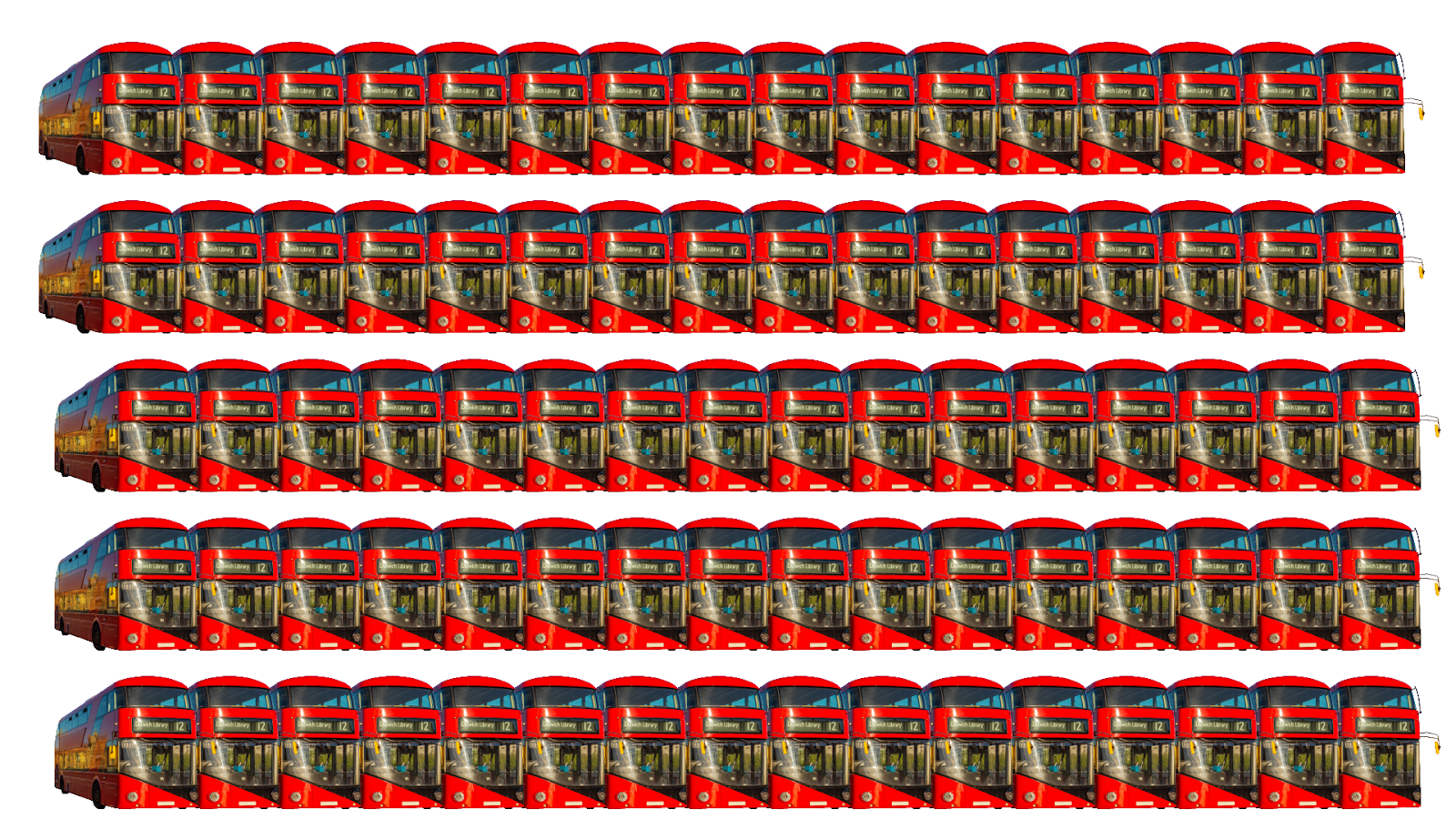
- Roughly 80 London buses: A double-decker bus covers about 25 m², so it would take around 80 buses parked together to cover 2,000 m².
- Around 20 house footprints: Typical new-build homes occupy 80–100 m², so 0.2 ha could physically fit around 20 building footprints, before allowing for roads, gardens, and spacing.
In everyday terms, 0.2 hectares is almost exactly half an acre, similar in size to a large single house plot, a small community green, a modest school site, or a 60–70 space car park.
Under the new rules, developments of roughly this scale, such as a small housing cluster or barn conversion scheme, would no longer trigger mandatory BNG.
How Many Homes Could Be Built on 0.2 ha?
A key aim of the exemption is to unlock small housing sites, so it helps to understand what 0.2 hectares (2,000 m²) can realistically deliver. The answer depends on housing density:
- Suburban density (~30 dwellings/ha): around 6 homes, typical of a small cul-de-sac of detached or semi-detached houses.
- Medium density (~50 dwellings/ha): roughly 10 homes, such as short terraces or compact village schemes.
- Urban density (~100 dwellings/ha): up to 20 flats, likely in a low-rise apartment block.
- High-density city sites (200+ dwellings/ha): 40+ apartments, requiring multi-storey development.
In most villages and town-edge locations, densities are below 50 dwellings per hectare, meaning single-digit housing numbers are typical. This supports the government’s framing of these as “minor developments”, often fewer than 10 homes.
Before and After: BNG Rules Compared
Current BNG
Most developments in England were required to deliver 10% Biodiversity Net Gain, unless they qualified for exemptions such as:
- De minimis impacts: Habitat loss under 25 m² (or <5 m hedgerow).
- Householder developments (extensions, alterations).
- Self-build and custom-build homes (temporary exemption).
- Zero-biodiversity baseline sites, such as fully paved land.
After April 2024, small sites were fully brought into BNG, making even modest schemes subject to ecological assessment and offsetting.
Proposed change
All previous exemptions still apply, plus a new site-size exemption:
Any site below 0.2 hectares (2,000 m²) would now be exempt from BNG.
This effectively sidelines the 25 m² rule, as most small sites now qualify automatically. The government has also signalled that older exemptions may be phased out, replaced by this simpler, clearer area-based threshold.
Importantly, exemption from BNG does not override other environmental protections. Wildlife legislation and local policies still apply.
In practice, BNG would now apply mainly to sites above 0.2 ha, while the 10% target and assessment process remain unchanged for larger developments.
Whether you're working on a minor development or planning for larger sites above the 0.2-hectare threshold, the direction of BNG policy is clear: biodiversity will remain a central consideration in land development.
While the proposed exemption may ease requirements for smaller schemes, most projects will still need to assess, quantify, and deliver measurable biodiversity outcomes.
Ready to get started with Biodiversity Net Gain? Visit our dedicated page to learn more. Or get in touch with a member of our team using the form below to discuss how we can support your project from assessment through to delivery.
.webp?width=400&height=250&name=scott-blake-WqB6qto5XyU-unsplash%20(1).webp)
.jpeg?width=400&height=250&name=Untitled%20(5).jpeg)