No Time to Wait: Preparing for the EU’s landmark deforestation law
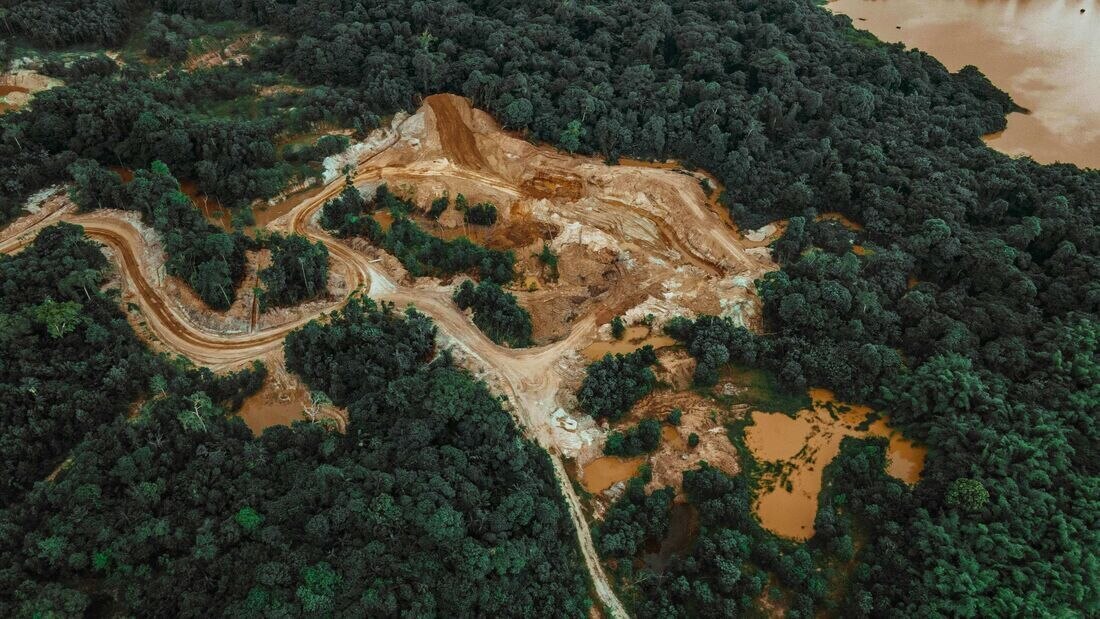
Deforestation is a main driver of climate change and the biodiversity crisis, making halting deforestation and restoring ecosystems one of the most effective ways to fight climate change.
Governments and policymakers widely recognize the urgency of addressing deforestation. In 2021, over 140 countries pledged to halt and reverse forest loss and land degradation by 2030, with momentum building toward these goals. A key step in this effort is the EU Deforestation Regulation (EUDR), a landmark policy designed to reduce the EU’s contribution to deforestation.
Despite (or due to) its massive potential and global reach, the EUDR has faced pushbacks and delays that risk reducing its effectiveness and slowing progress. In recent days the regulation has even prompted strong opposition from Trump officials.
Amid the uncertainty, many countries and governments are pressing ahead with preparations for the regulation’s implementation, with some openly advocating against further delays or attempts to weaken its requirements.
What is the EUDR?
The EUDR was adopted in June 2023 with the aim of ensuring that “certain products sold in or exported to the EU do not come from land that was deforested or degraded after Dec 31, 2020.” This would help reduce the EU’s contribution to deforestation, biodiversity loss, and GHG emissions as a result of EU consumer demand.
The EUDR targets commodities that have acted as major drivers of deforestation including timber, cattle, coffee, cocoa, rubber, oil palm, soy and products derived from them, mandating that they follow three conditions in order to be sold in or exported from the EU market.
For businesses, these conditions require EUDR-covered commodities and products to be deforestation-free, produced in compliance with relevant laws in the origin countries, and covered by a due diligence statement. In practice this means collecting information, assessing risks, and preparing statements.
What challenges has the EUDR faced?
Although the EUDR is already in force, since 2024 it has faced repeated delays and setbacks. In December 2025, mandatory compliance deadlines were pushed to December 30, 2026 for large corporations and to June 30, 2027 for small enterprises.
For countries and governments who have successfully started preparing and complying with the EUDR, these delays are unwelcome developments that add confusion and uncertainty to the entire market.
This month, a coalition of 29 global companies and associations, including Ferrero, Nestlé, and Tony’s Chocolonely, “formally petitioned the European Commission to reject any further amendments” to the regulation. Industry experts have also cautioned that additional postponements or simplifications could undermine its objectives.
Momentum is building
Agricultural expansion drives nearly 90% of global deforestation making the EUDR essential to curbing biodiversity loss. If successful the EUDR could help reverse deforestation worldwide and, despite goalposts shifting, legal experts don’t expect the EUDR to re-open for further simplification, nor do they expect the fundamental EUDR compliance obligations to change.
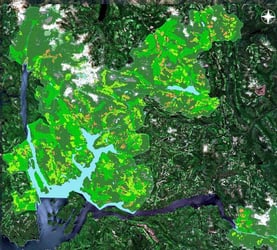
As such, many companies and EU member states have already started complying with EUDR. For these countries and companies, satellite and aerial Earth observation data has proven instrumental to “assessing EUDR compliance by enabling transparent, near-real-time monitoring of deforestation risks and commodity expansion across global supply chains”.
-
Costa Rica’s pilot program: Costa Rica developed a pilot program with its largest coffee cooperative that provided tools and training to growers, processors, roasters, and exporters to help them comply with EUDR. This included an assessment of “the best georeferencing technologies (including satellite imagery and AI programs) to certify which farms had not been deforested since 2020”. The initial pilot was expanded to include all coffee producers across the nation, meaning Costa Rica is one of the first nations close to making an entire sector EUDR-ready.
-
Unilever Palm Farm Mapping: Unilever is conducting land mapping across the small, independent palm farms in Indonesia who supply them, to achieve full traceability of their palm oil suppliers in accordance with EUDR.
-
Vietnam’s National Plan: Vietnam's national plan now includes stricter monitoring for forests that are at risk, greater investment into impacted growers’ livelihoods, and improved traceability and mapping.
.webp?width=590&height=458&name=george-dagerotip-XRY4giMaDoA-unsplash%20(1).webp)
Compliance can't wait
The overarching advice for businesses importing into the EU is to start complying immediately. This means establishing end-to-end supply chain traceability now as “waiting for regulatory guidance that is unlikely to materially change these core requirements would only compress the already limited time available to achieve compliance.”
The EUDR is a critical opportunity to halt deforestation and safeguard biodiversity worldwide. While its implementation will likely pose challenges for stakeholders across sectors and countries, the urgency of addressing deforestation leaves no room for inaction. The health of our planet depends on it.
.webp?width=1080&height=720&name=Gentian%20x%20Coreo%20(1).webp)
The New Gold Standard for BNG and UKHab Mapping
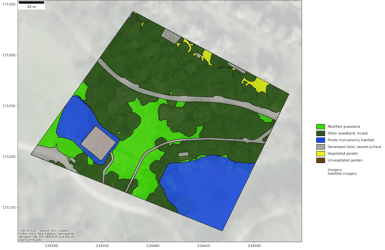
We’re excited to announce a long-awaited collaboration with Coreo. Together, we’re bringing Gentian’s ultra-high-resolution satellite imagery and AI-powered analysis directly into Coreo's industry-leading data collection software, creating a seamless workflow that delivers both efficiency and accuracy.
Our technology delivers rapid, large-scale mapping capabilities, while Coreo ensures that these insights are paired with expert ground truthing. This means ecologists can move quickly from big-picture mapping to in-depth, site-specific assessments, allowing them to focus on the ecology, not the polygons.
This partnership is about unlocking efficiency without replacing expertise. We aim to make habitat mapping faster and more cost effective, without compromising on quality.
.webp?width=400&height=250&name=Untitled_84_optimized_200%20(1).webp)