Peatland Mapping
Gentian delivers scalable, AI-driven peatland mapping leveraging sub-50 cm satellite imagery and verified ecological expertise. We identify ecosystem types, quantify conditions, and track restoration benchmarks—validating carbon assets and resilience remotely.
.jpg?width=2000&height=1333&name=george-hiles-bmGmO5EeRvc-unsplash%20(1).jpg)
How does our peatland mapping work?
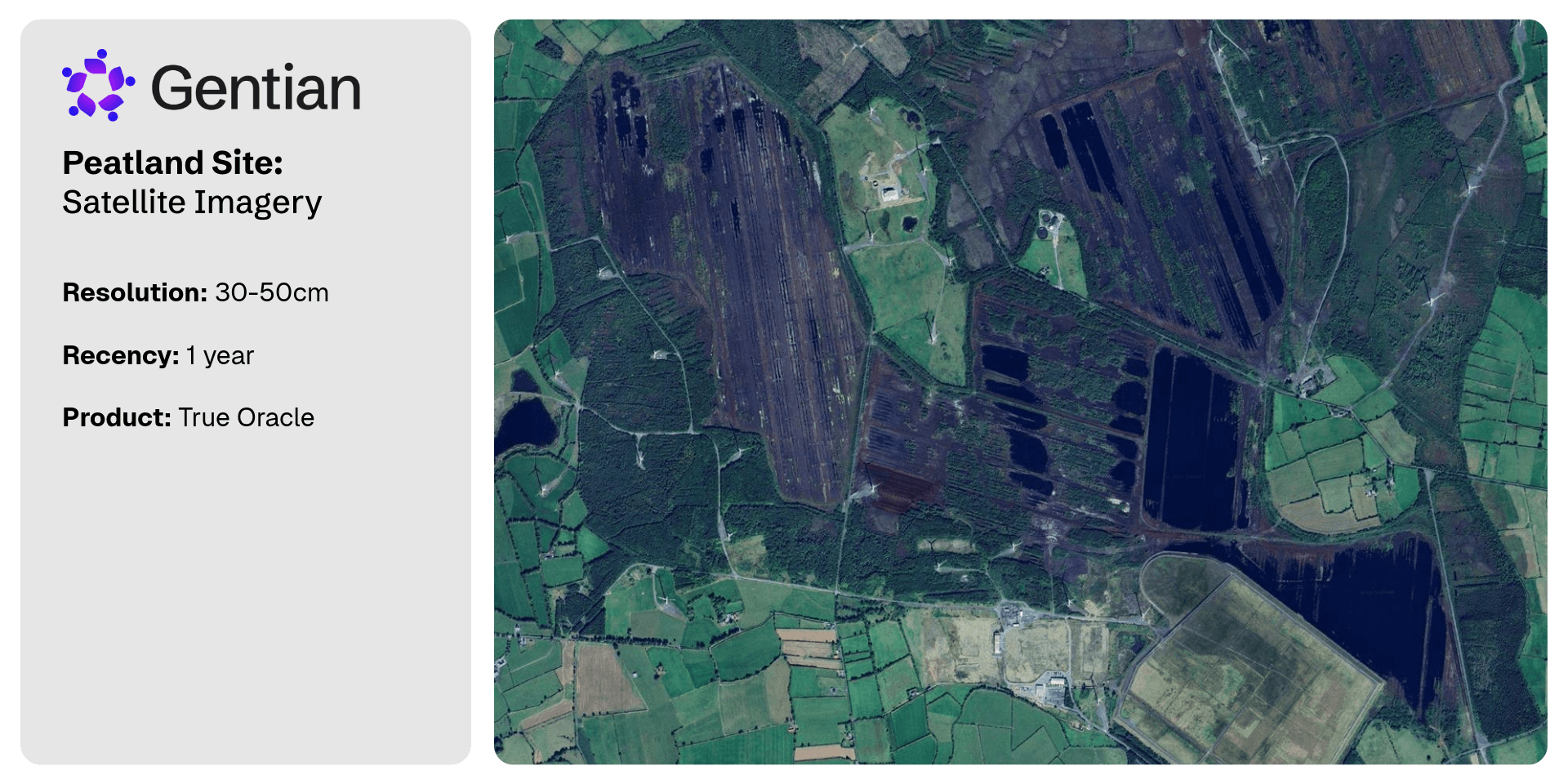
Leveraging sub-50 cm imagery, we engineer custom AI models to classify peatland extent and quantify ecosystem resilience.
We can find critical indicators such as dry vs wet peat, invasive tree encroachment (e.g. Sitka spruce), vegetation type (mosses, sedges, bog woodland), and structural patterns like pools or peat cuttings.
Define your area
Upload site boundaries or shapefiles to map your area of interest.
Custom analysis
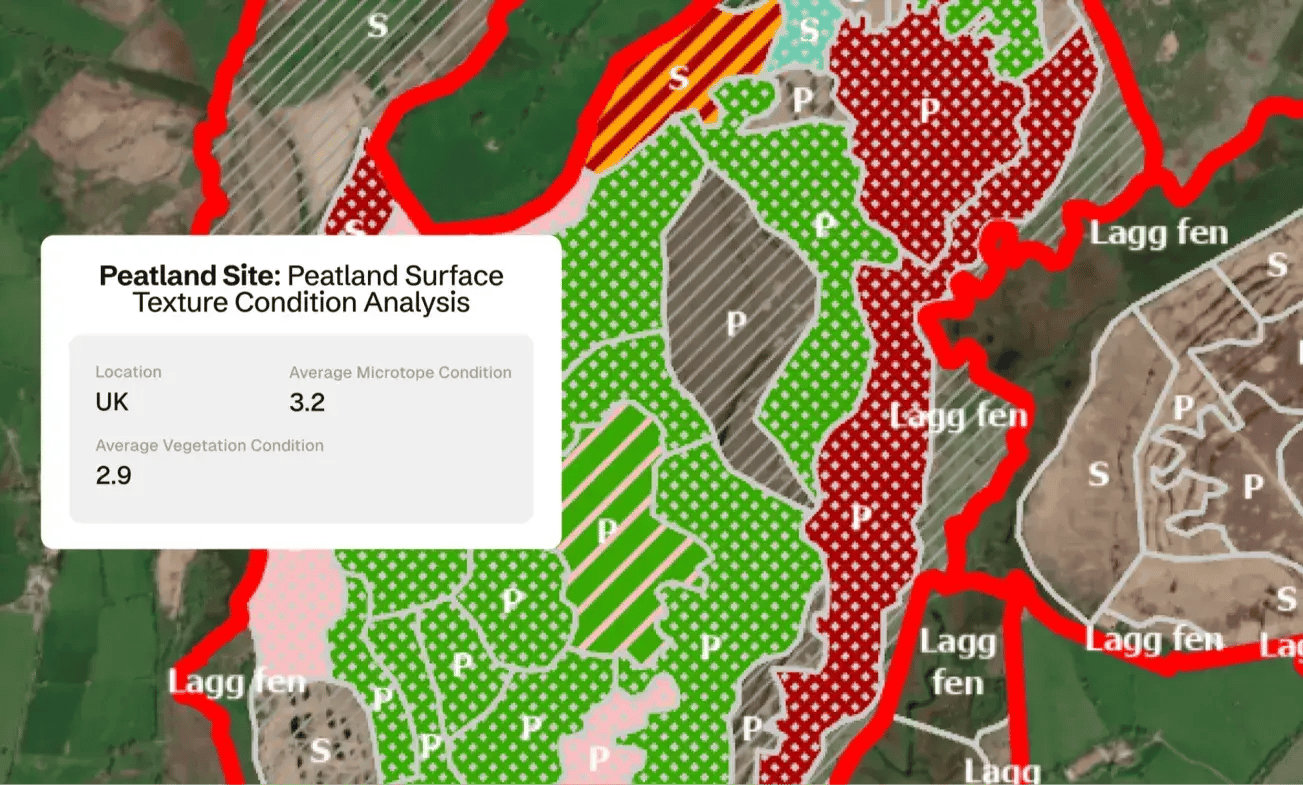
We apply peatland condition matrices (PCM), microtopography mapping, and spectral analysis to assess extent and health.
.png?width=1920&height=960&name=Services%20Pages%20Graphics-2%20(2).png)
Unlock actionable outputs
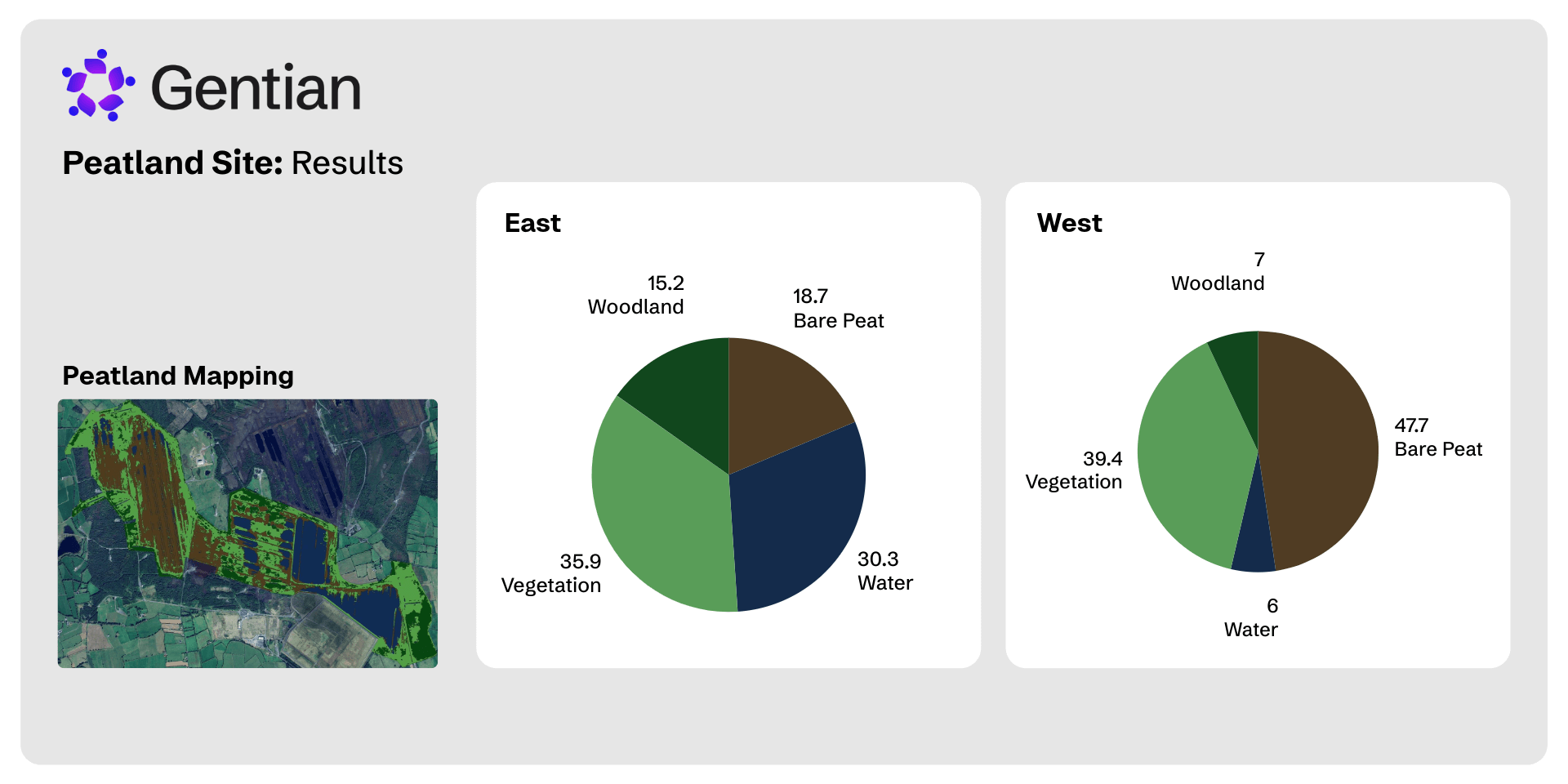
Receive GIS-ready maps and data visualizations, compatible with carbon standards (Verra, ACR), TNFD, and restoration planning.
Why is peatland mapping important?
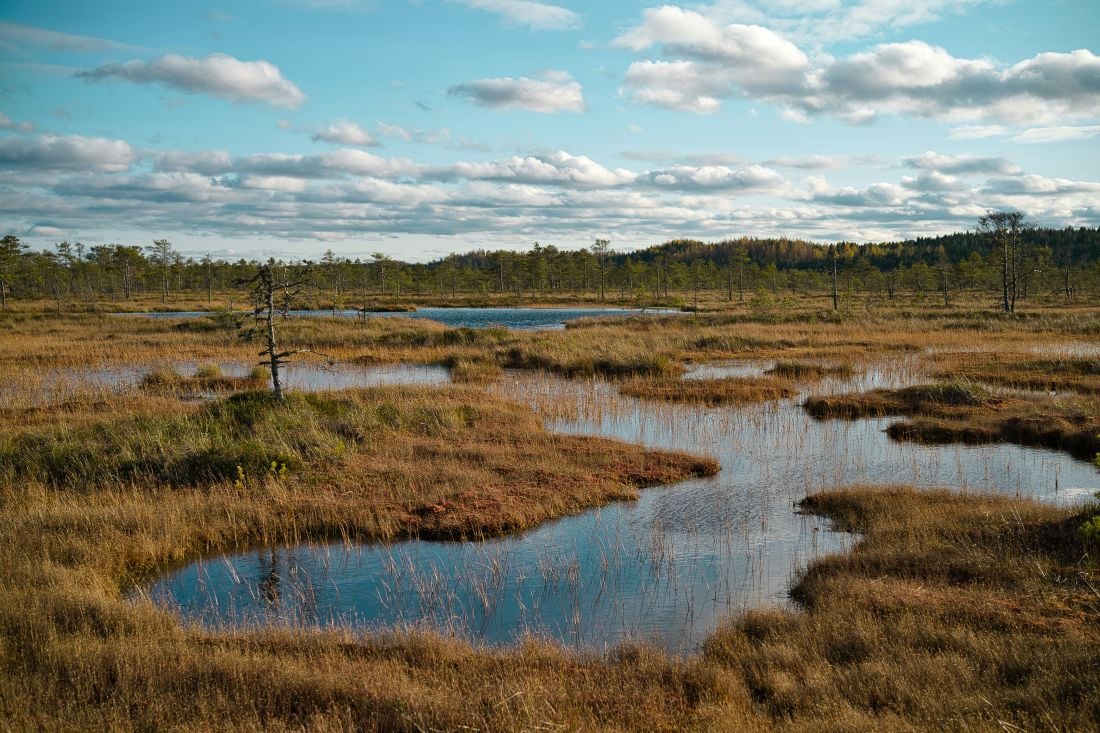
Peatland mapping is the precise classification of these critical carbon assets via remote sensing. It involves quantifying extent, categorizing habitat types, and assessing condition indicators like vegetation cover, microtopography, and moisture levels.
Peatlands store twice as much carbon as all the world’s forests combined—functioning as high-value natural capital. When degraded, they become significant carbon liabilities. Precision monitoring is essential for carbon verification, climate resilience, and risk mitigation.
Precise peatland condition assessment is critical for validating carbon assets, driving climate resilience, and mitigating land-use risk.
.jpg?width=1700&height=1133&name=transly-translation-agency-Gk7ZOxI2U2U-unsplash%20(1).jpg)
How is peatland mapping conducted?
Peatland mapping fuses ground-truthing with advanced remote sensing. Traditional field methods—including soil coring, vegetation surveys, and hydrological assessments—provide essential validation.
Gentian scales this process leveraging sub-50 cm satellite imagery and AI. We detect vegetation structure, water levels, and invasive species—delivering rapid, consistent ecological data across vast or inaccessible carbon landscapes.
.jpg?width=1300&height=975&name=henry-schneider-ifZEJE1_vI0-unsplash%20(1).jpg)
Key aspects of peatland mapping
Peatland mapping focuses on identifying and assessing the extent, type, and condition of peatland habitats. Key aspects include:
- Extent Mapping – Pinpointing the boundaries of carbon-rich wetlands using sub-50 cm imagery.
- Habitat Classification – Distinguishing specific peatland types (e.g., bogs, fens) and associated vegetation communities.
- Condition Assessment – Quantifying risk indicators such as water levels, erosion, and invasive tree encroachment.
- Resilience Tracking – Monitoring restoration benchmarks and degradation trends over time.
- Strategic Alignment – Ensuring outputs align with carbon registries (Verra, Plan Vivo, ACR, UK Land Carbon Registry), TNFD, and voluntary market standards.
What does a peatland condition assessment involve?
Peatland condition assessment quantifies the ecological integrity of critical carbon assets. It measures key indicators including vegetation composition, water saturation levels, erosion, and disturbance risks like invasive conifer encroachment.
Gentian leverages sub-50 cm imagery, spectral analysis, and proprietary AI to remotely pinpoint these features. We also apply the Peatland Condition Matrix (PCM) to classify condition levels, supporting restoration planning, carbon credit eligibility, and long-term monitoring.
.jpg?width=2000&height=1333&name=ulrich-knoll-1wbbEnfXRqA-unsplash%20(1).jpg)
Why choose Gentian?
Gentian fuses deep expertise in ecology and AI with extensive experience mapping wetlands across North America and Europe. We are pioneering the most advanced remote monitoring system for carbon-rich landscapes.
Our approach integrates verifiable carbon methodologies, ground-truthed datasets, and machine learning workflows engineered for wetland risk modeling. We empower restoration developers, verifiers, and land managers with credible, science-based data—rapidly and cost-effectively.
.jpg?width=2000&height=1333&name=k8-glEq5uPpBQs-unsplash%20(1).jpg)

Cost-efficient & scalable
Eliminates the bottlenecks of expensive, manual field surveys.

Rapid delivery
Ecological data delivered in days or minutes—accelerating decision making.

Unparalleled accuracy
Sub-meter resolution satellite imagery for granular habitat mapping.
.png?width=100&height=100&name=icons8-trust-100%20(1).png)
Trusted data
Reports fully aligned with TNFD and global standards, rigorously verified by our in-house experts.

.png?width=1540&height=558&name=GFSA_DigitalBadge_withoutyear_2024%20(1).png)


.ai%20(1).svg)





.jpg?width=1800&height=1200&name=joel-holland-TRhGEGdw-YY-unsplash%20(1).jpg)
Ecological Surveys
Gentian delivers Very-High-Resolution, AI-powered ecological surveys that are faster, more scalable, and cost-effective—offering reliable insights to support planning, land management, and sustainability goals.
.jpg?width=1600&height=1067&name=claudel-rheault-ZVbv1akA-l4-unsplash%20(1).jpg)
Habitat Mapping
Gentian leverages AI and satellite imagery to deliver rapid, precision ecological data. Ideal for baselines, resilience monitoring, or risk modeling—giving you a clear strategic view.

Biodiversity Monitoring, Reporting and Verification (MRV)
Our AI-driven MRV platform delivers precise remote assessments of habitat change and risk trends over time—fully aligned with TNFD, CSRD, and global standards.